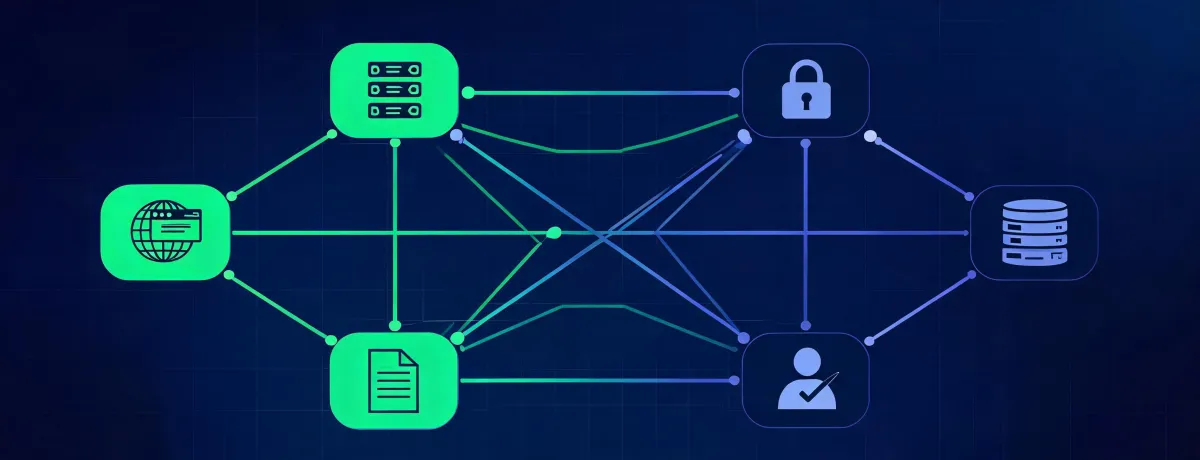
Three places to look before the first production run
This page has no sales form. Use the documentation paths below to prepare an approved runtime, protect connector secrets, and design a labeled account-activity test.
Runtime review
Confirm Node and npx availability, package identity, local file and network policy, supported agent environment, update ownership, and uninstall steps. Run the first test in an isolated workspace and read terminal prompts before allowing changes.
Place source and destination keys in the runtime secret store, apply least privilege, and document who can rotate or revoke them. Keep credentials, private visitor events, and restricted CRM fields out of prompts and screenshots.
Create a small authorized sample with resolvable, ambiguous, stale, conflicting, and suppressed accounts. Compare the brief with known CRM facts and require reviewers to record why each result was accepted, rejected, or left unknown.
The button copies text only. It does not run software, connect data, or complete configuration.
npx -y @okki-global/okki-go-taroball
After running, verify each state separately: installer completion, approved credential access, source retrieval, destination permissions, and a reviewable first result. Record the package version and configuration used so the test can be reproduced.
For the first result, require the source of each consequential field, its checked time, whether it was observed or inferred, and the reviewer’s decision. Test expected failures as carefully as happy paths: revoked keys, rate limits, missing CRM ownership, stale events, conflicting company identities, destination write rejection, and an explicit unknown result. A safe deployment should fail visibly and leave the operator able to stop, correct, and retry without silently sending or overwriting records.
Updating the package, revoking credentials, and deleting downstream data are separate tasks. Follow current package-manager and runtime instructions, then inspect agent logs, local files, CRM records, exports, and provider systems according to your retention map. Repeat the control review whenever sources, permissions, destinations, regions, or outbound policies change.