Behaviors that make the workflow dependable
State the source
Consequential fields retain provider or first-party event context and the time they were checked.
Preserve unknowns
Ambiguous identity, stale context, and conflicting records remain visible for review.
Minimize access
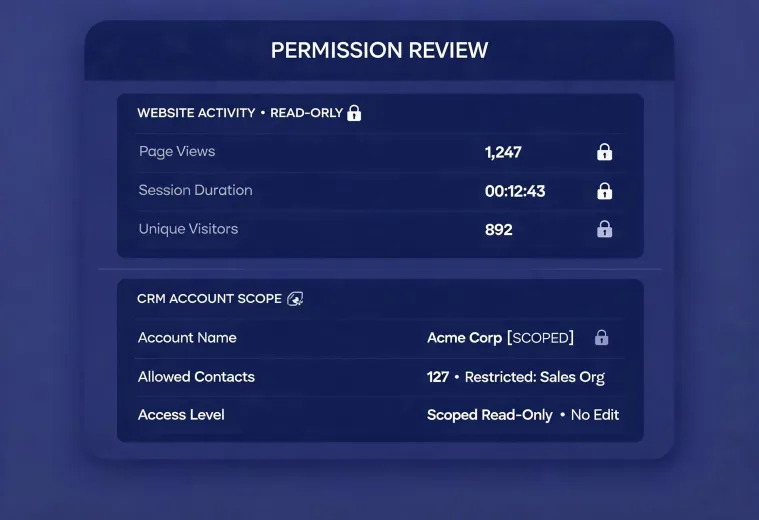
Connectors receive only the permissions required for a documented test and can be revoked.
Keep people accountable
Operators own target relevance, suppression, legal basis, message approval, and sending.
Integration work is evaluated as an operating system, not a checklist of familiar logos. A useful review asks which events enter the agent, which fields are authoritative, how conflicts are resolved, whether write-back is optional, where results persist, and who owns correction or deletion. Teams should document API rate limits, retry behavior, connector failure states, and the difference between read access and external action. Compatibility is verified in the buyer’s runtime; it is never inferred from a brand name alone.
We also separate procurement frameworks from actual evidence. SOC 2, ISO 27001, GDPR, CCPA/CPRA, CAN-SPAM, and CASL can be relevant evaluation topics, but their names are not badges claimed by this site. Buyers should request current first-party documentation from every runtime, data source, and destination in their configured flow, then assess applicability with qualified security, privacy, and legal reviewers.